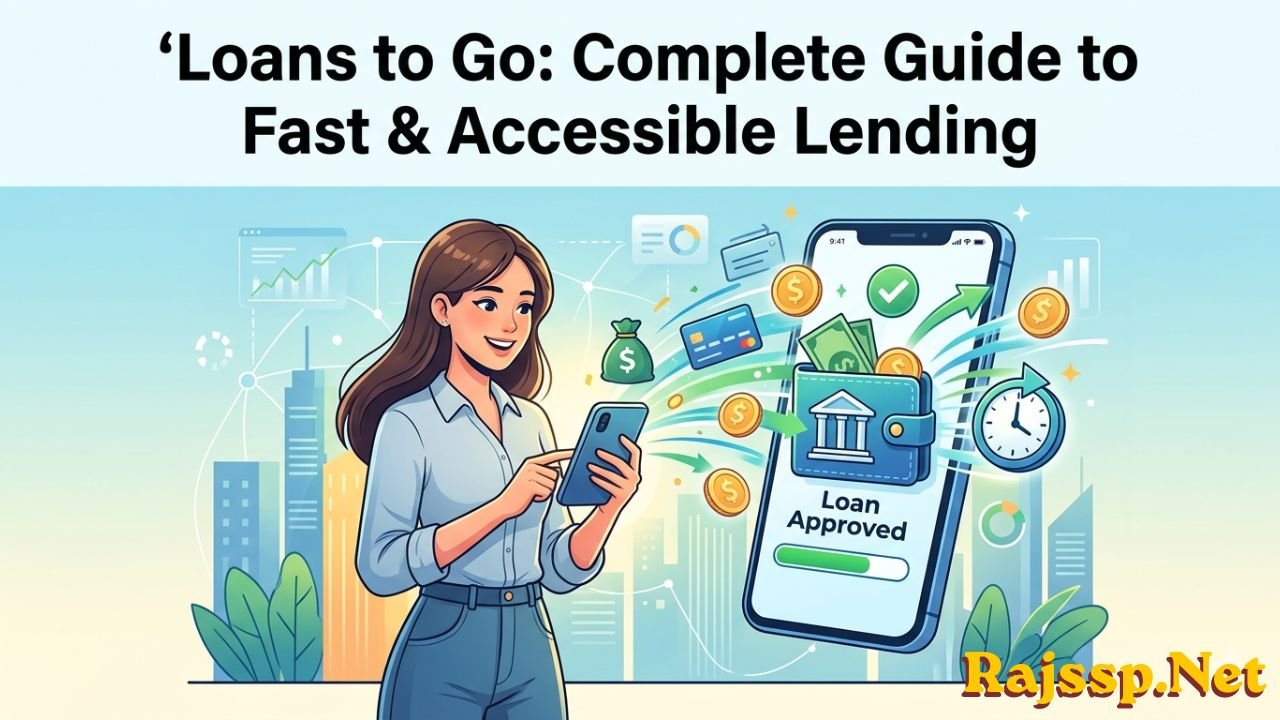
Loans to Go: Complete Guide to Fast & Accessible Lending
Introduction
Life doesn’t always wait for a convenient moment to throw a financial curveball. Whether it’s an unexpected medical bill, a car repair, or a rent shortfall, many people find themselves searching for fast solutions — and that’s exactly where loans to go come in.
The concept of loans to go is simple: accessible, quick, and on-demand lending designed to help people bridge financial gaps without the lengthy process of traditional banking. Instead of waiting days or even weeks for approval, borrowers can often get funds in their hands within hours.
This guide covers everything one needs to know about loans to go — from the different types available, to how the application process works, to smart tips for borrowing responsibly. Whether someone is exploring this option for the first time or looking to make a more informed decision, this article has got them covered.
What Are “Loans to Go”?
Definition and Concept
At its core, a loan to go refers to a category of lending that prioritizes speed, convenience, and accessibility. These are financial products designed for people who need money quickly and don’t have the luxury of waiting through long approval processes. The idea is straightforward — apply, get approved, and receive funds, often all within the same day.
How They Differ from Traditional Bank Loans
Traditional bank loans are known for their rigorous processes. They typically require strong credit scores, extensive documentation, in-person appointments, and waiting periods that can stretch from several days to a few weeks. Loans to go, on the other hand, operate quite differently. Most are available entirely online, require minimal paperwork, and cater to a broader range of credit profiles — including those who may not qualify at a conventional bank.
The trade-off, however, is that these loans often come with higher interest rates and shorter repayment terms, which is something every borrower should keep in mind.
Types of Lenders Offering Loans to Go
The lending landscape for fast loans has expanded significantly. Today, borrowers can turn to:
- Online lenders — digital-first companies that process applications 24/7
- Lending apps — smartphone-based platforms offering micro-loans and instant credit
- Credit unions — member-based institutions that sometimes offer fast personal loans at lower rates
- Payday lenders — storefronts and online services offering very short-term, small-dollar loans
Types of Loans to Go
There isn’t a one-size-fits-all solution when it comes to fast lending. Here’s a breakdown of the most common types of loans to go available today:
Personal Loans
Personal loans are among the most popular forms of quick lending. They are typically unsecured — meaning no collateral is required — and can range from a few hundred to several thousand dollars. Approval can happen within minutes online, making them a go-to choice for many borrowers.
Payday Loans
Payday loans are short-term, small-amount loans meant to be repaid on the borrower’s next payday. While they are incredibly fast to obtain, they come with very high fees and APRs. They are generally best used as an absolute last resort due to the risk of falling into a cycle of debt.
Cash Advance Loans
A cash advance allows someone to borrow against their credit card limit or expected paycheck. These are convenient but can carry high fees and interest from the moment the cash is accessed — unlike regular credit card purchases that may have a grace period.
Title Loans
Title loans use a vehicle as collateral. The borrower hands over their car title in exchange for a loan, and if they fail to repay, the lender can repossess the vehicle. While these can provide fast access to larger sums, the risk involved is significant.
Buy Now, Pay Later (BNPL)
Buy Now, Pay Later services have surged in popularity, especially in retail. These are instant credit products that split a purchase into smaller installments, often with zero interest if paid on time. They’re especially common during online shopping.
Mobile App Loans
Fintech companies have transformed the lending space through mobile apps. These platforms analyze spending behavior and income data to offer small, fast loans — sometimes within seconds of applying. Many even allow repayment tracking through the app itself.
How Do Loans to Go Work?
Step-by-Step Application Process
The application process for most loans to go follows a relatively simple path:
- Choose a lender — Compare platforms, rates, and loan amounts
- Fill out an online application — Basic personal, financial, and employment details
- Submit required documents — Typically ID, proof of income, and bank details
- Receive a decision — Often within minutes to a few hours
- Accept the loan offer — Review terms carefully before signing
- Receive funds — Deposited directly to a bank account or mobile wallet
Required Documents and Eligibility Criteria
While requirements vary by lender, borrowers generally need to provide:
- A valid government-issued ID
- Proof of income (pay stubs, bank statements, or tax returns)
- An active checking or savings account
- Contact information and residential address
Approval Timelines
One of the biggest selling points of loans to go is their speed. Many online lenders offer same-day approval and even same-day funding. In some cases, funds can arrive within hours of submitting an application. Next-day funding is also common for applications submitted after business hours.
Disbursement Methods
Funds are usually delivered through:
- Direct bank transfer — The most common method
- Cash — At physical storefronts for payday or title loan lenders
- Mobile wallet — Available through certain fintech lending apps
Who Qualifies for Loans to Go?
Credit Score Requirements
Requirements vary widely depending on the lender. Traditional online personal loan lenders may look for a credit score of 600 or above, while payday and app-based lenders often have no minimum credit score requirement at all.
Income and Employment Requirements
Most lenders want to see a consistent source of income — whether from employment, freelance work, government benefits, or other verifiable sources. Some lenders require a minimum monthly income threshold to qualify.
Age and Residency Requirements
Borrowers must typically be at least 18 years old and a resident of the country or state where the lender operates. In some regions, the legal age for borrowing is 21.
Options for Bad Credit Borrowers
Bad credit doesn’t necessarily mean no options. Many lenders offering loans to go specialize in serving borrowers with poor or no credit history. These lenders may charge higher rates, but they provide access to funds when other avenues are closed. Secured loans (like title loans) are another avenue for those with damaged credit, though they carry their own risks.
Pros and Cons of Loans to Go
Before jumping into any financial product, it’s worth weighing the advantages and drawbacks clearly.
| Pros | Cons |
|---|---|
| Fast approval — often within minutes | High interest rates compared to traditional loans |
| Minimal paperwork required | Short repayment terms can strain budgets |
| Accessible entirely online | Risk of entering a debt cycle if misused |
| Often no collateral needed | Lower borrowing limits than bank loans |
| Available to those with bad credit | Some lenders may have hidden fees |
Where to Get Loans to Go
Top Online Lending Platforms
Several reputable online lending platforms have built strong reputations for fast, transparent lending. When comparing options, borrowers should look at interest rates, repayment flexibility, loan amounts, and customer support quality.
Mobile Lending Apps
Fintech apps like those offering earned wage access or micro-lending have made borrowing even more convenient. These apps often allow users to apply, manage, and repay their loans entirely from a smartphone.
Local Financial Institutions
Credit unions and community banks sometimes offer quick personal loans to existing members. These institutions tend to offer more favorable rates than payday or app lenders, making them worth checking for those who already have an account.
What to Look for in a Reputable Lender
When exploring loans to go reviews online, a few key factors consistently stand out among satisfied borrowers:
- Transparent fee structures — No surprise charges buried in the fine print
- Clear repayment terms — Borrowers should know exactly when and how much they owe
- Responsive customer service — Accessible support in case issues arise
- Secure platform — Look for HTTPS, privacy policies, and data protection practices
- Positive user reviews — Third-party reviews on platforms like Trustpilot or Google can be very telling
Speaking of which, loans to go reviews from real users are one of the best ways to evaluate a lender before committing. Reading both positive and negative feedback gives a more balanced picture of what to expect.
Costs and Interest Rates
APR Ranges for Different Loan Types
The annual percentage rate (APR) varies dramatically across loan types:
- Personal loans: Typically range from 6% to 36% APR
- Payday loans: Can exceed 300% to 400% APR when annualized
- Cash advances: Often 20% to 30% APR plus fees
- Title loans: Generally 25% per month, translating to 300% APR
- BNPL: 0% if paid on time; penalty rates apply for missed payments
Hidden Fees to Watch Out For
Beyond the APR, borrowers should look out for:
- Origination fees — Charged upfront for processing the loan
- Prepayment penalties — Fees for paying off a loan early
- Late payment fees — Charged when a payment is missed or delayed
- Rollover fees — Common in payday lending when a loan is extended
Total Cost of Borrowing: An Example
Suppose someone borrows $500 for 30 days at a 30% monthly interest rate (common with some short-term lenders). The total repayment amount would be $650 — meaning $150 paid purely in interest for one month. This example illustrates why comparing lenders and understanding full costs before signing is so important.
Responsible Borrowing Tips
Fast loans can be incredibly helpful tools — but only when used wisely. Here are some practical guidelines for anyone considering a loan to go:
Only Borrow What Can Be Repaid
It sounds obvious, but many borrowers underestimate how quickly interest accumulates. Borrowing the minimum necessary reduces risk and total repayment costs significantly.
Compare Multiple Lenders Before Deciding
Never settle for the first offer. Spending 20 to 30 minutes comparing lenders can save a significant amount in interest and fees. Many comparison websites allow side-by-side loan analysis at no cost.
Read the Fine Print
Before accepting any loan, reading through every clause of the agreement is essential. Pay close attention to repayment dates, interest accrual methods, and any clauses related to defaults.
Understand the Repayment Schedule
Knowing exactly when payments are due — and for how much — helps avoid late fees and protects credit scores. Setting up automatic payments can eliminate the risk of accidentally missing a due date.
Avoid Predatory Lenders
Unfortunately, not every lender has the borrower’s best interests in mind. Red flags include lenders who guarantee approval regardless of credit history, require upfront fees before disbursement, pressure borrowers to decide quickly, or lack a verifiable physical address or licensing information.
Alternatives to Loans to Go
Before turning to a fast loan, it’s worth considering whether any alternatives might be a better fit:
Emergency Savings Funds
Building even a small emergency fund — as little as $500 to $1,000 — can help avoid the need for fast loans altogether. It’s a longer-term solution, but one of the most financially empowering habits anyone can develop.
Borrowing from Family or Friends
While it can feel uncomfortable, borrowing from someone trusted often means zero interest and flexible repayment. Clear communication and a simple written agreement can keep the relationship intact.
Credit Card Advances
For those who already have a credit card, a cash advance can be faster and cheaper than a payday loan — though it still carries fees and interest worth understanding first.
Community Assistance Programs
Non-profit organizations, local government programs, and community charities sometimes provide emergency financial assistance for those in need — often with no repayment required at all.
Employer Salary Advances
Many employers are willing to advance a portion of an employee’s upcoming paycheck. It’s essentially an interest-free loan, making it one of the most cost-effective options available.
Frequently Asked Questions (FAQs)
Can Someone Get a Loan to Go with Bad Credit?
Yes. Many lenders offering loans to go specifically cater to borrowers with bad or no credit history. However, these loans typically come with higher interest rates and lower borrowing limits than those offered to borrowers with strong credit profiles.
How Fast Can Funds Be Received?
Many lenders offer same-day funding, with some fintech apps processing disbursements within minutes of approval. Most borrowers can expect funds within 24 hours at the latest, though this depends on the lender and the time of application.
Are Loans to Go Safe?
They can be — as long as borrowers choose reputable, licensed lenders. Reading loans to go reviews and verifying that a lender is properly regulated in their region are important steps before submitting any personal or financial information.
What Happens if Repayment Isn’t Made on Time?
Missing a repayment can result in late fees, increased interest charges, damage to the borrower’s credit score, and in some cases, collection activity. For secured loans like title loans, failure to repay may result in loss of the collateral. Reaching out to the lender proactively if payment issues arise is always the recommended course of action.
Conclusion
Loans to go have become a genuine lifeline for millions of people navigating unexpected financial challenges. When used responsibly and with full awareness of the costs involved, a loan to go can bridge a gap, cover an emergency, or provide breathing room when it’s needed most.
The key is to approach fast lending with the same thoughtfulness one would apply to any financial decision. Comparing lenders, reading reviews, understanding rates and fees, and having a clear repayment plan in place are all habits that separate smart borrowers from those who end up in deeper financial trouble.
For those ready to explore their options, the best next step is to compare a few reputable lenders, check eligibility requirements, and look through genuine loans to go reviews from other borrowers. Being informed before applying — not after — makes all the difference.
Borrow smart, borrow only what’s needed, and always read the fine print.
Also Read: Car Insurance Lawyer: Everything You Need to Know Before Filing a Claim