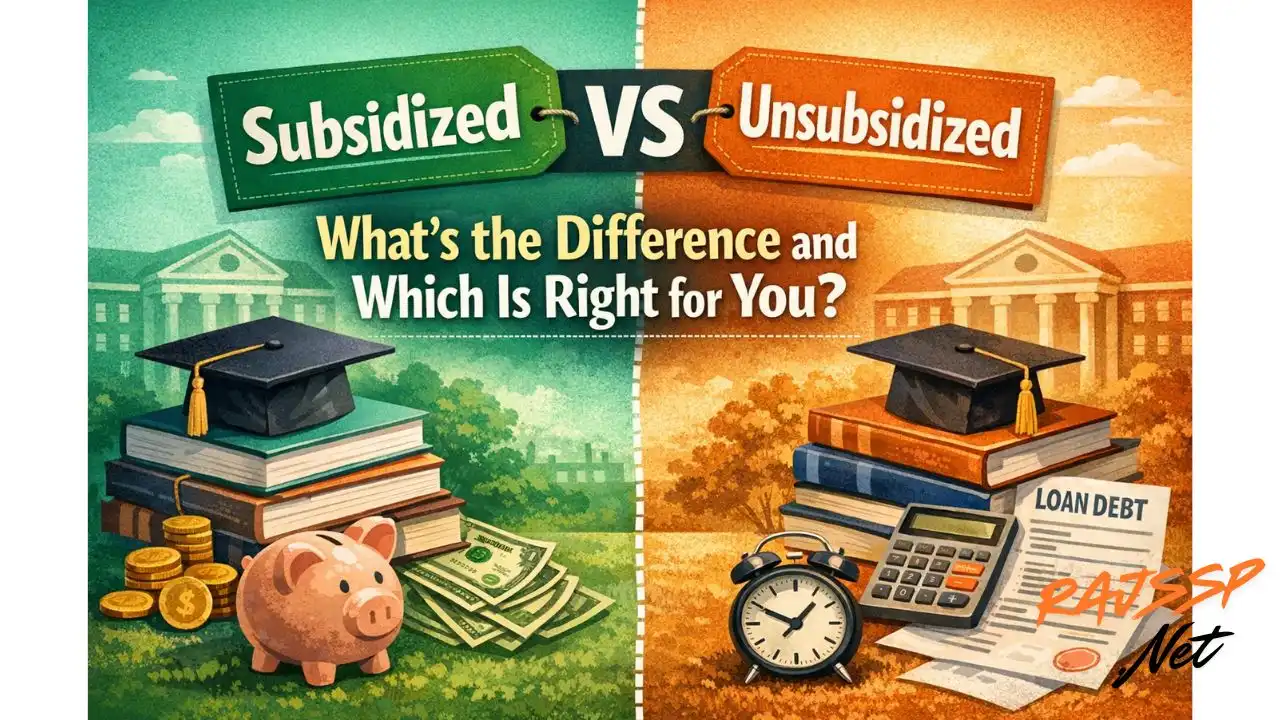
Subsidized vs Unsubsidized Student Loans: What’s the Difference and Which Is Right for You?
Introduction
College is expensive — there’s no sugarcoating it. Between tuition, housing, textbooks, and everyday living costs, the price tag of higher education can feel overwhelming. That’s exactly why millions of students turn to federal student loans every year to help bridge the gap between what they have and what they need.
But here’s the thing: not all federal student loans work the same way. Before signing on the dotted line, it’s worth understanding the difference between subsidized vs unsubsidized student loans — because that difference can cost (or save) thousands of dollars over time.
This article breaks down everything a student or parent needs to know about both loan types, from eligibility and interest rules to repayment options and long-term costs. By the end, the choice between the two should feel a whole lot clearer.
What Are Federal Student Loans?
Federal student loans are funds borrowed from the U.S. Department of Education to help cover the cost of college or career school. Unlike private loans, federal loans come with fixed interest rates, flexible repayment options, and access to programs like income-driven repayment and loan forgiveness — making them a much safer starting point for most students.
Who Qualifies?
To be eligible for federal student loans, a student generally needs to:
- Be a U.S. citizen or an eligible non-citizen
- Be enrolled at least half-time in an eligible degree or certificate program
- Have a valid Social Security number
- Maintain satisfactory academic progress
- Not be in default on any existing federal loans
How to Apply
The gateway to federal student loans is the FAFSA — the Free Application for Federal Student Aid. Students fill it out each academic year, and the school uses that information to determine what types and amounts of aid are available. It’s free to submit and takes less than an hour for most people. There’s really no reason to skip it.
What Are Subsidized Student Loans?
Definition and Key Features
A subsidized student loan is a type of federal loan available to undergraduate students who demonstrate financial need. The word “subsidized” refers to the fact that the federal government steps in and covers the interest on the loan during specific periods — which is a pretty significant benefit.
Who Qualifies?
Subsidized loans are only available to undergraduate students who show financial need as determined by the FAFSA. Graduate and professional students are not eligible for this loan type.
How Interest Works
This is where subsidized loans really shine. The government pays the interest on a subsidized loan:
- While the student is enrolled at least half-time in school
- During the six-month grace period after leaving school
- During any approved period of deferment
This means that when a student graduates and enters repayment, the loan balance is exactly what was originally borrowed — no surprise additions from accrued interest.
Annual and Lifetime Borrowing Limits
Subsidized loan limits depend on the student’s year in school:
- 1st year: Up to $3,500
- 2nd year: Up to $4,500
- 3rd year and beyond: Up to $5,500
- Lifetime limit: $23,000 for dependent undergraduate students
Pros and Cons
Pros:
- Government covers interest during school and grace period
- Lower overall repayment cost
- Ideal for students with demonstrated financial need
Cons:
- Only available to undergraduates
- Requires financial need
- Lower annual borrowing limits
What Are Unsubsidized Student Loans?
Definition and Key Features
An unsubsidized student loan is a federal loan available to a much broader group of students — including undergraduates, graduate students, and professional degree students — regardless of financial need. The trade-off? Interest starts building from the moment the loan is disbursed.
Who Qualifies?
Almost any student enrolled at least half-time in an eligible program can qualify for an unsubsidized loan. There’s no financial need requirement, which makes this the go-to option for graduate students and those who don’t qualify for subsidized loans.
How Interest Works
Unlike subsidized loans, the government does not cover the interest on unsubsidized loans at any point. Interest begins accruing immediately after disbursement. If a student doesn’t pay the interest while in school, it capitalizes — meaning it gets added to the principal balance. Over four years, this can meaningfully increase the total amount owed.
Annual and Lifetime Borrowing Limits
- Dependent undergrad students: $2,000/year unsubsidized (in addition to subsidized limits)
- Independent undergrad students: Up to $6,000–$7,000/year
- Graduate students: Up to $20,500/year
- Lifetime limit: $31,000 (dependent undergrad), $57,500 (independent undergrad), $138,500 (graduate)
Pros and Cons
Pros:
- Available to undergraduate, graduate, and professional students
- No financial need required
- Higher borrowing limits, especially for graduate students
Cons:
- Interest accrues immediately and capitalizes if unpaid
- Higher total repayment cost compared to subsidized loans
- Requires discipline to manage interest during school
Subsidized vs Unsubsidized: Side-by-Side Comparison
When looking at subsidized vs unsubsidized loan options head-to-head, the differences become very clear:
| Feature | Subsidized | Unsubsidized |
|---|---|---|
| Eligibility | Undergrads with financial need | Undergrad, grad, professional students |
| Financial need required? | Yes | No |
| Interest during school | Government pays it | Accrues immediately |
| Available to grad students? | No | Yes |
| Annual limits (undergrad) | Up to $5,500 | Up to $7,000 (independent) |
| Lifetime limit (undergrad) | $23,000 | $57,500 (independent) |
| Overall cost | Lower | Higher (due to interest accrual) |
The bottom line: subsidized loans are the more affordable option when available, but unsubsidized loans fill the gap when eligibility or limits fall short.
How Interest Accrual Affects Your Total Loan Cost
A Real-World Example
To understand what is a subsidized loan vs unsubsidized in terms of actual dollars, consider this scenario:
Two students each borrow $10,000 for a 4-year degree at a 6.5% interest rate.
- Student A (Subsidized): The government covers interest during school. At graduation, the balance is still $10,000.
- Student B (Unsubsidized): Interest accrues daily for 4 years. By graduation, roughly $2,850 in interest has accumulated. If unpaid, it capitalizes — making the new principal around $12,850.
On a standard 10-year repayment plan, Student B ends up paying significantly more in total — just because interest was allowed to grow unchecked.
The Impact of Capitalized Interest
Capitalization is what makes unsubsidized loans more expensive than they first appear. When accrued interest gets folded into the principal, it then earns interest itself — a compounding effect that inflates the total loan cost over time.
Long-Term Repayment Cost Comparison
Over a 10-year repayment period, the student with the capitalized interest balance (Student B) would pay hundreds to thousands of dollars more than Student A, even with identical interest rates. This is why financial advisors consistently recommend exhausting subsidized loan eligibility before touching unsubsidized options.
Which Loan Should You Choose?
Always Exhaust Subsidized Loans First
For any student who qualifies, the answer is simple: take the subsidized loans first. The government-covered interest is essentially free money working in the student’s favor. There’s no reason to leave that benefit on the table.
When Unsubsidized Loans Make Sense
Unsubsidized loans become necessary when:
- A student doesn’t qualify for subsidized loans (no demonstrated financial need)
- The subsidized limit doesn’t cover the full cost of attendance
- The student is pursuing a graduate or professional degree
In these cases, unsubsidized loans are still far preferable to private student loans in most situations.
Tips for Minimizing Interest on Unsubsidized Loans
Students can reduce the long-term cost of unsubsidized loans by making interest-only payments while still in school. Even small, regular payments prevent interest from capitalizing and keep the principal from growing. It doesn’t have to be the full interest amount — something is always better than nothing.
Repayment Options for Both Loan Types
Both subsidized and unsubsidized federal loans come with the same set of repayment options, which is one of the major advantages of keeping loans federal.
Standard Repayment Plan
The default plan spreads payments equally over 10 years. It results in the lowest total interest paid, assuming the borrower can afford the monthly payments.
Income-Driven Repayment Plans
For borrowers who need more flexibility, income-driven plans (like SAVE, IBR, PAYE, and ICR) cap monthly payments at a percentage of discretionary income. After 20 to 25 years of qualifying payments, any remaining balance may be forgiven.
Public Service Loan Forgiveness (PSLF)
Borrowers who work full-time for a qualifying government or nonprofit employer may be eligible for PSLF, which forgives the remaining loan balance after 120 qualifying payments. Both subsidized and unsubsidized loans qualify for this program.
Deferment and Forbearance
If a borrower faces financial hardship, deferment or forbearance allows temporary pause or reduction of payments. During deferment, subsidized loan interest continues to be covered by the government — another advantage for borrowers holding subsidized balances.
Frequently Asked Questions
Can a Student Have Both Subsidized and Unsubsidized Loans at the Same Time?
Yes, and it’s actually very common. Many students receive a financial aid package that includes both types. In that case, the subsidized portion should always be drawn on first, since it carries the interest-coverage benefit.
What Happens to Interest If Loans Are Deferred?
For subsidized loans, the government continues to cover interest during deferment. For unsubsidized loans, interest keeps accruing and will capitalize when the deferment period ends — increasing the total balance owed.
Do Subsidized Loans Have Better Interest Rates?
No. As of recent federal loan periods, subsidized and unsubsidized loans for undergraduates carry the same fixed interest rate. The advantage of subsidized loans isn’t a lower rate — it’s the government’s willingness to pay the interest during school and deferment.
Can Graduate Students Get Subsidized Loans?
No. Subsidized loans are exclusively for undergraduate students with financial need. Graduate and professional students are limited to unsubsidized loans and, in some cases, Graduate PLUS loans.
Conclusion
Choosing between subsidized vs unsubsidized student loans doesn’t have to be complicated once the key differences are clear. Subsidized loans are the gold standard for eligible undergrad students — the government covering interest during school is a benefit that genuinely adds up over time. Unsubsidized loans, while less favourable in that regard, are still a solid federal borrowing option when subsidised limits run out or financial need doesn’t qualify.
The smartest move any student can make is to complete the FAFSA as early as possible, review the financial aid award carefully, and always borrow subsidized funds before moving to unsubsidized. From there, using a student loan repayment calculator to estimate long-term costs can help make borrowing decisions feel much more informed and intentional.
Federal student loans are a tool — and like any tool, they work best when used wisely.
Also Read: CWS Global Travel Loan Everything You Need to Know